Why is my dog walking more slowly than they used to?
They used to pull you along on every walk.
Now you’re the one waiting for them.
At first, most of us don’t think much of it.
“They’re getting older,” we tell ourselves. “Of course they don’t have the same energy anymore.”
And sometimes that’s true.
But a slower pace isn’t always just a natural part of aging.
Sometimes it’s a sign that your dog’s joints are no longer allowing them to move as comfortably as they once did.
Every dog ages differently
Just like people, dogs don’t all age at the same rate.
Some are still full of energy at twelve years old.
Others begin slowing down much earlier.
What’s most important isn’t your dog’s age—it’s whether their behavior has changed.
If they were happy and energetic just a few months ago but now stop more often during walks or struggle to keep up, it’s worth asking why.
When walks stop being enjoyable
Dogs with joint pain usually still want to go for a walk.
The problem isn’t that they don’t want to walk.
The problem is that walking has become uncomfortable.
You may notice them starting the walk more slowly, stopping more often to sniff, or pausing more frequently than they used to.
Many owners assume their dog is simply becoming more curious.
In reality, they may just be looking for an excuse to take a short break.
Watch for the small changes
Often, it’s the little things that tell you the most.
Does your dog no longer enjoy longer walks?
Do they turn around and head home sooner than they used to?
Are they falling behind instead of walking beside you?
Do they spend much longer resting after a walk?
None of these changes automatically means your dog has a joint problem.
But if you notice several of them happening together, it’s worth considering whether their joints could be the reason.
What could be causing it?
In older dogs, arthritis is one of the most common causes of slower walking.
However, other conditions—including joint injuries, hip or elbow dysplasia, spinal problems, or inflammatory joint disease—can also affect the way a dog moves.
If your dog is also taking longer to stand up or no longer wants to jump into the car, joint problems become even more likely.
We explore that topic in more detail in our article “Your Dog Doesn’t Want to Jump Into the Car? It May Not Be Laziness.“
How can you help?
The most important thing is not to push your dog beyond their limits.
Several shorter walks each day are usually much better than the occasional long hike.
Keeping your dog at a healthy weight is equally important, since every extra pound places additional stress on already vulnerable joints.
If your veterinarian confirms that joint disease is the cause, they may recommend long-term joint support alongside treatment to help maintain mobility and quality of life.
Don’t ignore changes that keep getting worse
Dogs age gradually, which means their changes in movement often happen so slowly that we don’t notice them until they’re obvious.
If you have the feeling your dog walks differently than they did a year ago, trust your instincts.
It may simply be age.
Or it may be your dog’s quiet way of telling you that every step has become a little less comfortable than it used to be.
The sooner you discover the cause, the better the chance your four-legged friend can continue enjoying walks for years to come.

 Skip to content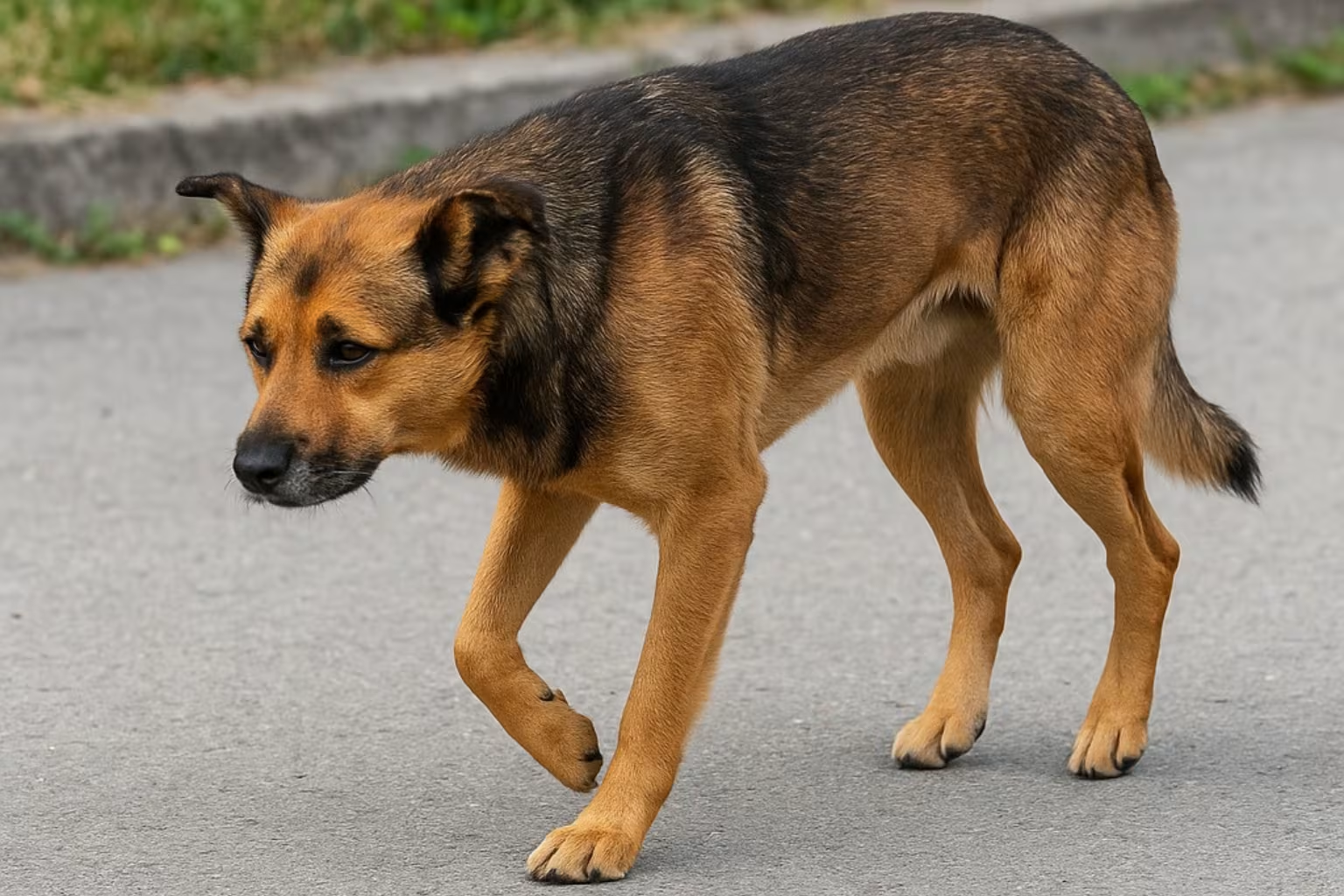


 Optimized by Seraphinite Accelerator