Many dogs begin to behave differently around stairs as they get older.
Some pause at the bottom before climbing.
Others take each step more slowly and carefully than they used to.
Some simply wait for you to carry them.
Because these changes happen gradually, most owners assume it’s just part of aging.
But stairs are actually one of the best ways to spot early mobility problems in dogs.
Why are stairs so difficult?
Walking on level ground doesn’t require much effort for most dogs.
Stairs are a different story.
Climbing puts extra strain on the hips and hind legs, while going downstairs increases the load on the shoulders, elbows, and knees.
If those movements have become uncomfortable or painful, your dog will naturally begin adjusting the way they move.
At first, the changes are almost impossible to notice.
The subtle signs many owners miss
Your dog probably won’t stop using the stairs overnight.
Instead, the changes tend to be small.
They may climb more slowly.
Pause for a few seconds before taking the first step.
Take one step at a time instead of bounding up the staircase.
Or they may simply look for another way around whenever they have the choice.
These small behavioral changes are often among the earliest signs that movement isn’t as comfortable as it once was.
What could be causing it?
In older dogs, arthritis is one of the most common reasons for difficulty using stairs.
However, hip dysplasia, cruciate ligament injuries, spinal problems, and other joint conditions can cause similar symptoms.
If you’ve also noticed your dog taking longer to get up or becoming reluctant to jump into the car, joint disease becomes an even more likely explanation.
We talk more about those signs in our article “Your Dog Doesn’t Want to Jump Into the Car? It May Not Be Laziness.“
How can you make life easier?
If stairs have become difficult for your dog, don’t force them to use them unless it’s absolutely necessary.
Whenever possible, choose an elevator or a route without stairs.
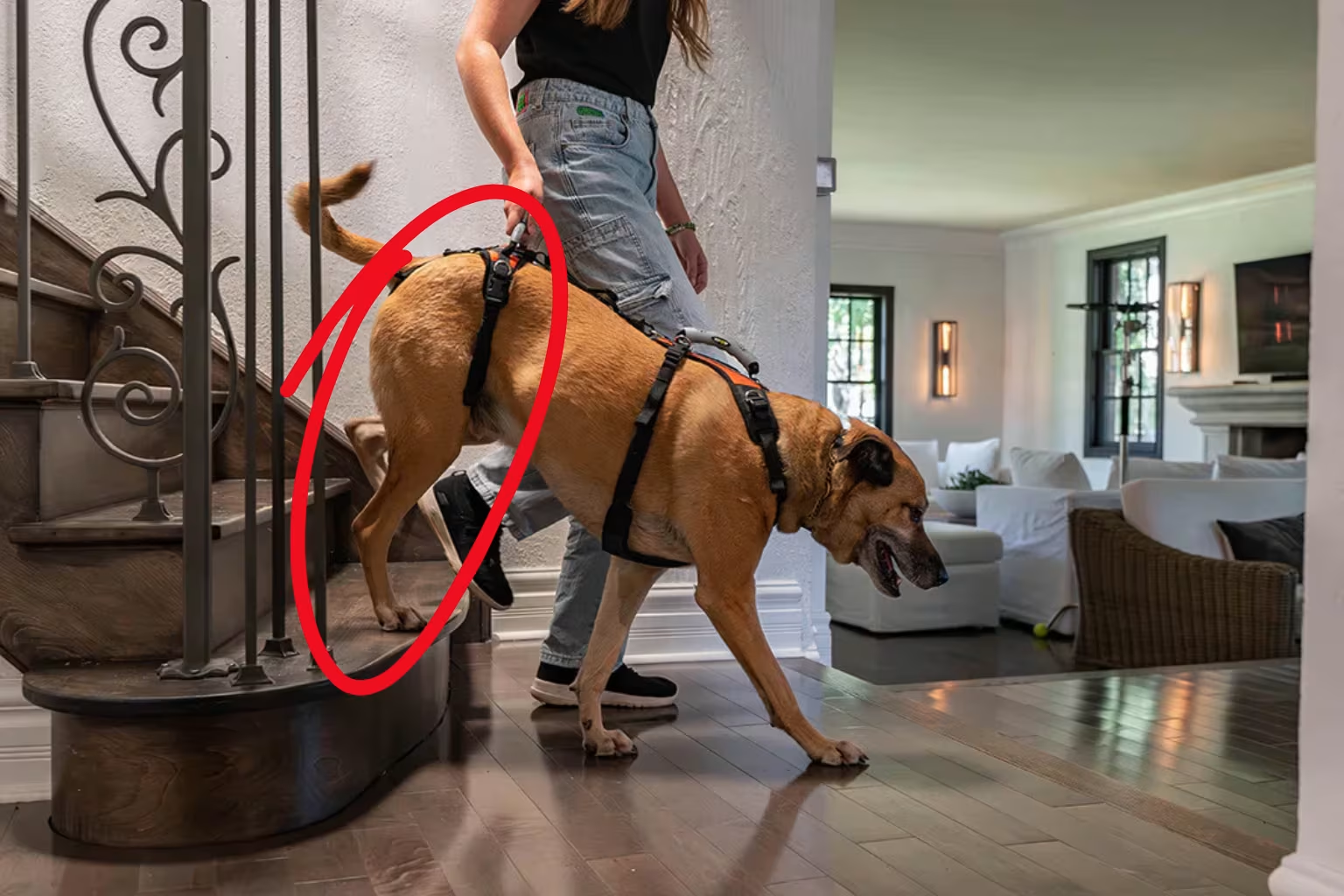
For larger dogs, a lifting harness can provide extra support and reduce the strain when climbing a few steps.
At home, make sure your dog isn’t slipping on smooth floors. Hardwood, tile, and other slippery surfaces can make moving around much more challenging for dogs with sore joints.
When should you see a veterinarian?
If your dog starts avoiding stairs completely or seems painful while climbing or descending them, it’s time to schedule a veterinary examination.
Your veterinarian can assess your dog’s joints, identify whether arthritis, an injury, or another condition is responsible, and recommend the most appropriate treatment.
The earlier joint problems are diagnosed, the better the chance of keeping your dog active and comfortable for years to come.
Stairs often reveal more than you think
Dogs rarely tell us they’re in pain.
Instead, they show us through changes in their everyday habits.
If your dog is finding stairs much more difficult than they did a year or two ago, don’t assume it’s simply a normal part of getting older.
Sometimes, that small hesitation before the first step is your dog’s earliest way of telling you that their joints need a little extra care.


 Skip to content


 Optimized by Seraphinite Accelerator