Gentle Movement Helps More Than Complete Rest
Many owners assume dogs with hip dysplasia should avoid exercise entirely.
In reality, the right type of movement helps maintain muscle strength, joint flexibility, and overall mobility.
The key is choosing low-impact activities that don’t overload the joints.
1. Controlled Daily Walks
Short, consistent walks are one of the best ways to support mobility.
Aim for:
- 15–30 minutes
- Flat surfaces
- Comfortable pace
- Daily consistency
Avoid long hikes or sudden bursts of activity.
2. Swimming
Swimming is often considered one of the best exercises for dogs with joint issues.
Benefits include:
- Supports muscles
- Reduces pressure on joints
- Improves cardiovascular health
- Encourages full range of motion
Always supervise your dog around water.
3. Slow Hill Walking
Gentle uphill walking can strengthen the hind legs without excessive impact.
Choose:
- Mild slopes
- Short sessions
- Slow pace
Avoid steep hills or slippery terrain.
4. Sit-to-Stand Exercises
Encourage your dog to slowly sit and stand several times.
This simple movement helps strengthen important muscles around the hips and knees.
Keep repetitions low and stop if your dog seems uncomfortable.
5. Balance Exercises
Standing on soft surfaces like foam mats or balance cushions can help improve stability and coordination.
These exercises should always be introduced gradually.
Don’t Overdo It
Avoid:
- Repeated jumping
- Chasing balls for long periods
- High-speed running
- Sharp turns
- Slippery floors
More exercise isn’t always better.
Consistency matters more than intensity.
Support Exercise with Daily Nutrition
Movement is only one part of joint care.
Many owners combine regular exercise with daily nutritional support containing ingredients like:
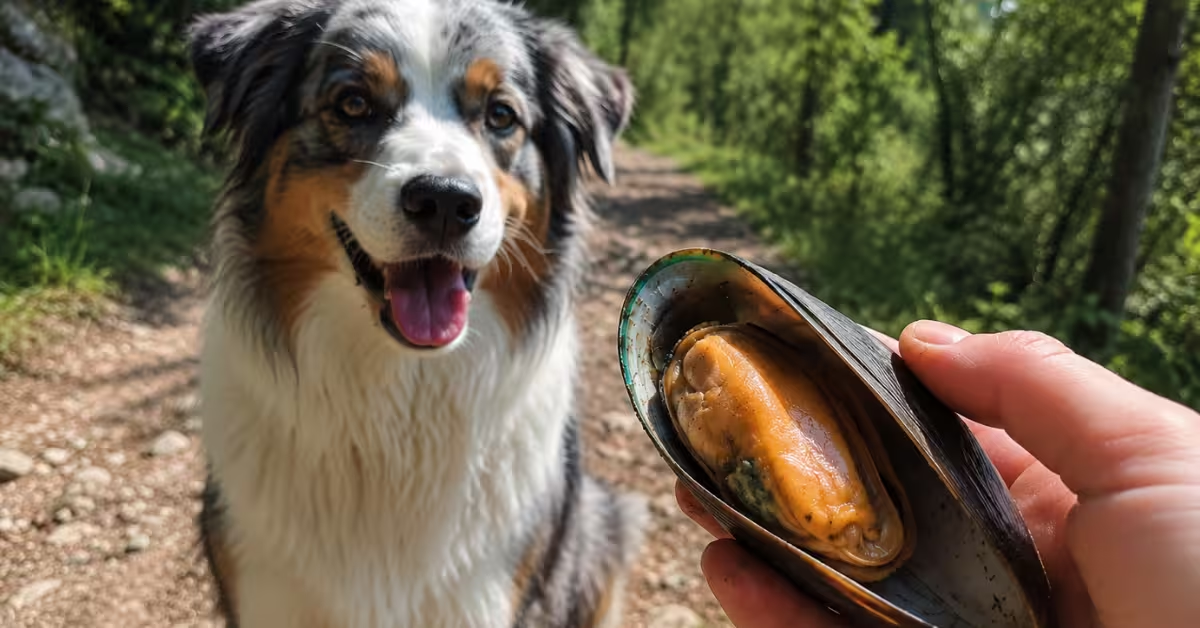
- New Zealand Green-Lipped Mussel
- Glucosamine
- MSM
- Marine omega fatty acids
to help support healthy joints and mobility.
Final Thoughts
Every dog is different.
Work with your veterinarian to create an exercise routine that matches your dog’s age, size, and condition.
Small daily habits often make the biggest difference over time.

 Skip to content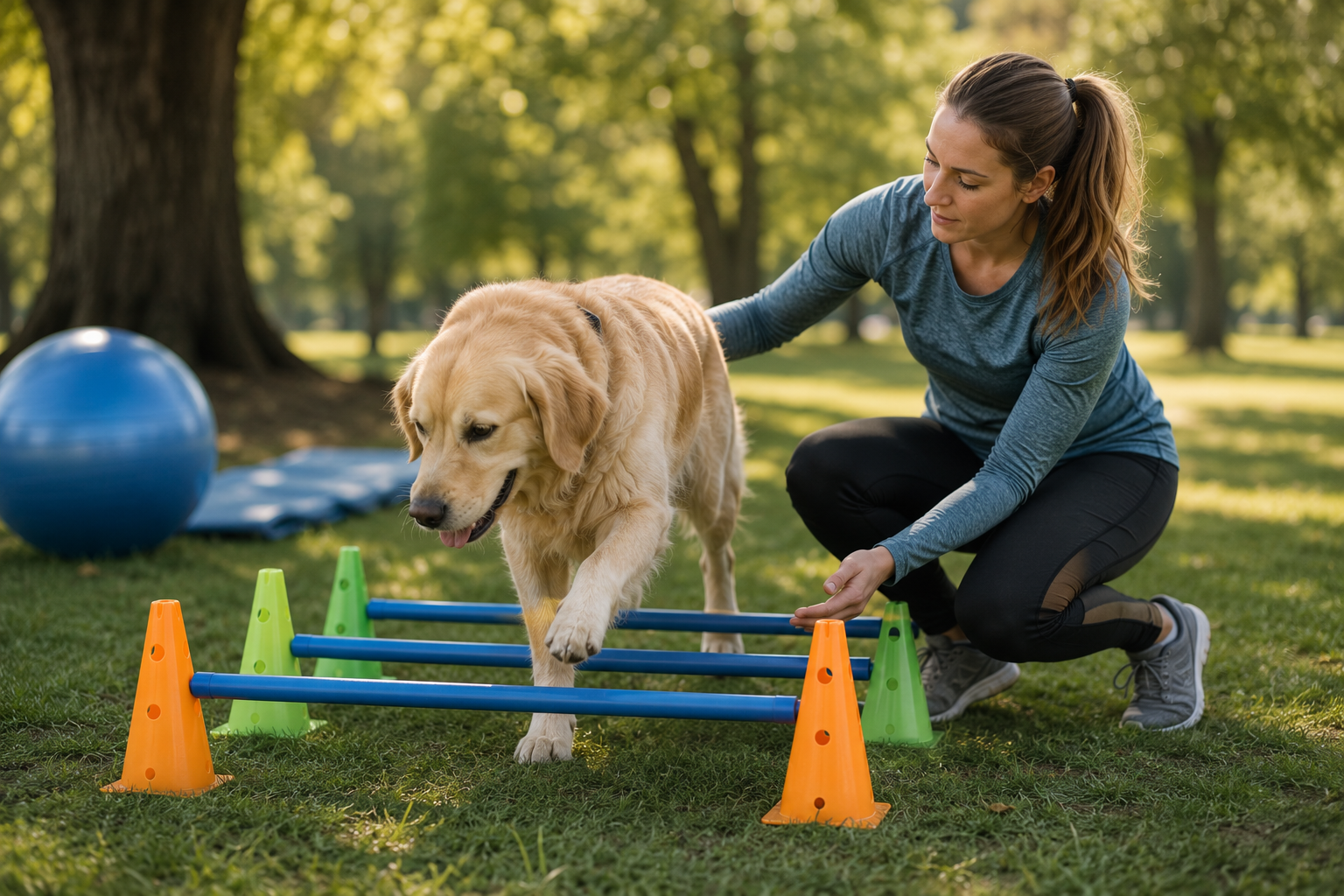


 Optimized by Seraphinite Accelerator